
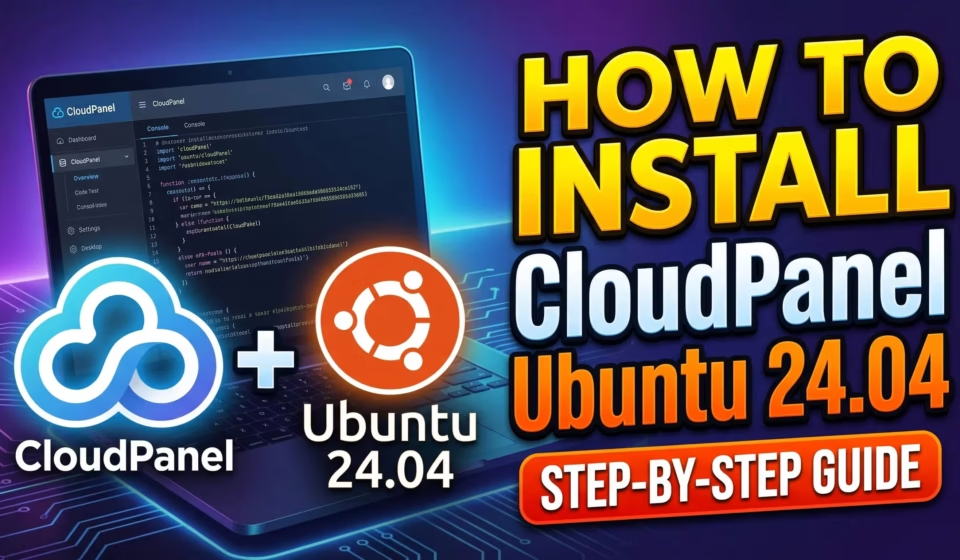

How to Install CloudPanel on Ubuntu 24.04 – Step-by-Step Guide (2027)
CloudPanel is one of the fastest and most lightweight free control panels available for VPS hosting. If you want cPanel-level convenience without the licensing fees, installing CloudPanel on Ubuntu 24.04 takes less than 10 minutes – and this guide walks you through every step.
What Is CloudPanel?
CloudPanel is a free, modern server control panel built for PHP applications. It runs on Nginx, supports multiple PHP versions, and includes free Let’s Encrypt SSL, a file manager, and one-click WordPress installation. Unlike heavier panels, it uses minimal server resources – perfect for small VPS plans.
You can see about cloudpanel full information hereCloudPanel Requirements for Ubuntu 24.04
Before starting, make sure your server meets these minimum requirements:
- OS: Ubuntu 24.04 LTS (fresh install, 64-bit)
- RAM: 1 GB minimum (2 GB recommended)
- CPU: 1 core minimum
- Disk: 10 GB free space
- Access: Root user (or sudo privileges)
⚠️ Important: Install CloudPanel on a fresh server. If Apache, Nginx, MySQL, or another panel is already installed, the installation will fail.
Step 1: Connect to Your VPS via SSH
Open your terminal (or PuTTY on Windows) and log in as root:
ssh root@your-server-ip
Step 2: Update the Server
Always update your package list first:
apt update && apt upgrade -y
This takes 1-2 minutes depending on your VPS speed.
Step 3: Run the CloudPanel Installer
CloudPanel provides a one-line installation script. For Ubuntu 24.04 with MySQL 8.4, run:
curl -sS https://installer.cloudpanel.io/ce/v2/install.sh -o install.sh; \
echo "a3ba69a8102345127f4ae0e3cfe89cd0a2c7b1ea04f99a5ff5e3c5f9d1a2b3c4d5  install.sh" | sha256sum -c && \
sudo bash install.sh
(Always copy the latest command with its checksum from the official CloudPanel documentation, as the hash changes with each release.)
The script automatically installs Nginx, PHP-FPM, MySQL, Redis, and all dependencies. Grab a coffee – it takes about 5-10 minutes.
Step 4: Access the CloudPanel Dashboard
Once installation finishes, open your browser and visit:
Your browser will show a security warning because the panel uses a self-signed SSL certificate initially – click Advanced > Proceed to continue.
Step 5: Create Your Admin Account
On first visit, CloudPanel asks you to create an admin user. Choose a strong password and save it securely. After logging in, you’ll see the clean dashboard where you can:
- Add domains and websites (PHP, WordPress, Node.js, static HTML)
- Issue free Let’s Encrypt SSL certificates
- Manage databases, cron jobs, and firewall rules
- Monitor server resources in real time
Step 6: Point Your Domain (Optional but Recommended)
To access the panel via a domain instead of an IP, create an A record in your DNS pointing to your server IP, then add the site inside CloudPanel. You can also map port 8443 to a subdomain like panel.yourdomain.com.
Common Installation Errors & Fixes
- “Unsupported OS” > You’re not on a fresh Ubuntu 24.04/22.04 or Debian install.
- Port 8443 not opening > Check your cloud provider’s firewall/security group and allow ports 80, 443, and 8443.
- MySQL conflict > Remove existing MySQL packages before running the installer.
Final Thoughts
Installing CloudPanel on Ubuntu 24.04 is genuinely one of the easiest VPS setups you’ll ever do – one command and you’re ready to host websites with free SSL and blazing-fast Nginx. Next, secure your server with SSH keys and a firewall, and you’re production-ready.
Is CloudPanel free to use?
Yes, CloudPanel Community Edition is completely free and open source, with no licensing fees – making it a popular alternative to cPanel and Plesk.
What are the minimum requirements for CloudPanel on Ubuntu 24.04?
You need a fresh Ubuntu 24.04 LTS server with at least 1 CPU core, 1 GB RAM, 10 GB disk space, and root access.
Can I install CloudPanel on an existing server with websites?
No. CloudPanel must be installed on a fresh server. Existing web servers (Apache, Nginx) or databases will conflict with the installer.
Does CloudPanel support WordPress?
Yes – CloudPanel offers one-click WordPress installation, plus support for PHP apps, Node.js, Python, and static sites.